When people hear the term physical AI, it is easy to imagine autonomous robots, machines that walk, talk, and make decisions on their own. At the extreme, something like those science-fiction movies in which machines end up making decisions above human beings. It is a powerful image, but it can also be misleading. Physical AI is something much broader and, above all, much closer to our everyday lives.
In simple terms, physical AI is technology that connects artificial intelligence with something in the real world: a camera, a sensor, a vehicle, a device, a machine or, yes, a robot. The difference from the AI we commonly use on a computer or phone is that it is no longer limited to analyzing information inside a screen. It can perceive what is happening in the environment and, in some cases, act on it.
A sensor that simply measures temperature is not necessarily physical AI. But if that information feeds a model capable of interpreting patterns, anticipating a situation, making a decision and triggering an action, then we are entering different territory. Intelligence stops working only with data and begins to interact with the world around us.
That is why one simple way to understand this evolution is to think about a very human sequence: observe, understand, decide and act. For years we have developed systems capable of capturing information and automating responses. What is changing now is the ability to combine better sensors, greater computing power and increasingly advanced AI models to interpret situations with greater richness and respond with more autonomy.
Physical AI is emerging rapidly, but its foundations are not entirely new. One very visible example is autonomous taxis already operating in some cities. The vehicle uses cameras, sensors and other devices to observe what is happening around it. Artificial intelligence interprets that information, identifies pedestrians, other vehicles, signs and obstacles, decides what to do and ultimately controls the car. AI is not merely analyzing information: it is using that intelligence to interact with the physical world.
But perhaps the best way to understand what all of this may mean is not to keep adding definitions. It may be more useful to spend a few minutes with an ordinary person in a large city where physical AI has already become a natural part of the environment.
A Morning with Joe
My name is Joe. It is six-thirty in the morning and I have just woken up.
I am still in bed when I say, “Turn on the light and adjust the temperature, please.” The assistant interprets my instruction and the room responds. The light comes on and the environment begins to change before I even put my feet on the floor.
I walk into the kitchen. I do not need to program the coffee maker manually. I ask it to prepare my usual coffee and the machine begins to work. It knows my preferences and how I like to drink it.
I have breakfast, take a shower, get dressed and pick up my phone. I do not even open an app. I simply say, “I need a taxi at 7:30 in front of my building.” The assistant understands the request, identifies my location, coordinates the service and confirms the ride.
At 7:30 I walk downstairs with my briefcase. The taxi is already waiting.
Before I reach the vehicle, I pass a huge digital screen. For a few seconds, the content changes and a pair of jeans appears in a brand and style very close to my preferences. I stop for an instant. The advertisement achieved exactly what it wanted: it captured my attention.
I get into the taxi. The vehicle knows my destination and begins the trip. On the interior screen, messages and offers appear that are tailored to the passenger, the route and the context.
But the most interesting thing is not on that screen. It is all around me. The vehicle observes the street through cameras and sensors. It detects pedestrians, other cars, traffic lights and obstacles. It continuously interprets what is happening, decides when to accelerate, brake or turn, and converts those decisions into physical actions. I simply sit there.
Before entering the office, I stop at a coffee shop. A screen recognizes that I am a regular customer and immediately presents several options I usually like. I choose my coffee. The system confirms the order, processes the payment using my previously authorized payment method, and preparation begins.
I take my coffee and head into work. Perhaps ninety minutes have passed since I got up. During that time, I interacted with lighting, climate control, appliances, a digital assistant, advertising, transportation, payment systems and a coffee shop. Some interactions were simple automations. Others combined perception, artificial intelligence and actions in the physical world. And many of them happened almost without me thinking about them.
Joe’s story may sound futuristic. Now, let us come back down to Earth and look at where we actually are today.
We should not lose sight of the speed at which artificial intelligence is evolving. Many of the pieces needed to build experiences like the ones we have just imagined already exist; others are advancing rapidly. So when we think about the next five years, perhaps we should not ask only what new technologies will appear, but how much they may change the way we work, shop, move around, communicate and interact with the services we use every day.
Joe’s example is not meant to describe exactly what our future will look like. It is meant to show something more important: the distance between artificial intelligence and the physical world is getting smaller. And as that distance shrinks, many experiences that still seem novel today may quietly become embedded in everyday objects, vehicles, spaces and services.
We can react to this in two ways. We can look at the transformation with fear, worry about everything that could change and wait to see what happens. Or we can begin to understand it, prepare ourselves and start asking now how we can take advantage of the opportunities it may create.
Physical AI does not have to look like a robot walking in front of us. It can be embedded in a store, a car, a hospital, a building, an office, a medical device or a service we use every day. And that may be one of the reasons why its impact could be much deeper than we imagine.
“The important thing is not to be afraid of what is coming. The important thing is to be prepared to understand it and take advantage of it.”
Are we aware of what is coming?
And, even more importantly: are we prepared to take advantage of it?
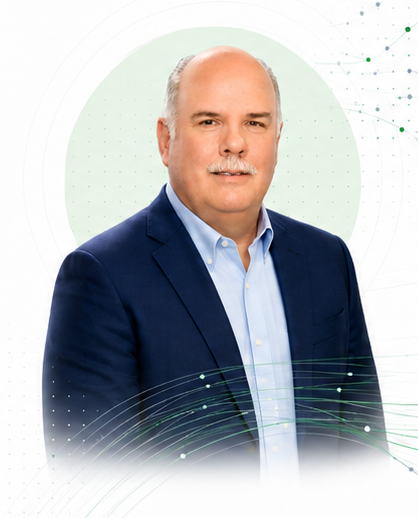
About the Author
Otto Stecher has over 35 years of experience integrating strategy, performance, costs, processes, data science, and applied artificial intelligence to transform organizations across Latin America and internationally.